Projects and References

New projects at a glance

Here we list the newly added projects.


BioAdapt

The BioAdapt project aims to develop a digital planning tool that combines climate adaptation and biodiversity conservation measures in a holistic, evidence-based manner. The goal is to support end users, such as municipalities and planners, in developing integrated adaptation strategies, as well as in clearly quantifying and visualizing planning scenarios.


ReAsCon

In Germany, approximately 90% of domestic mineral raw materials are used in the construction industry. At the same time, a great deal of valuable construction waste—particularly from the 1960s through the 1980s—ends up in landfills due to the presence of fibrous silicate minerals. As a result, even recyclable concrete is often classified as hazardous waste. The ReAsCon project is developing innovative processes to safely process this unwanted construction legacy and make it reusable.


District Heating from Wastewater

The Neckarpark research project demonstrates that the large-scale use of wastewater heat at the neighborhood level is a technically reliable, economically viable, and environmentally sound solution for heating new urban neighborhoods.


Quanderland

The project combines innovation, technology, and sustainability in a unique research network, designed to make quantum technologies tangible, application-oriented, and future-proof. In addition to fostering new cooperation formats for idea development and rapid prototyping, the project emphasizes the robust investigation of ecological, social, and economic aspects of the applications, as well as the added value that these technologies can deliver.

All projects at a glance

Here we list our current as well as successfully completed research and industrial projects.

Cancel
  • © Shutterstock / Maksim Safaniuk

    As part of the funding initiative “Resource-Efficient Circular Economy – Urban Mining” launched by the German Federal Ministry for Research, Technology and Space (BMFTR), the research project “RueBe” was initiated in November 2025. The project aims to recover and reintegrate mineral waste from DK0 landfills into sustainable building material cycles. It is coordinated by the Fraunhofer Institute for Building Physics IBP.

    more info
  • Processing masonry rubble

    Highlights from research and development

    Processing masonry rubble in the future
    © Fraunhofer IBP

    Will we be capable of fully processing masonry rubble in the future and recycling it sustainably?

    The Inorganic Materials and Recycling department has succeeded in recovering single-variety secondary raw materials from masonry demolition waste.

    more info
  • View of the elevated highway in Ludwigshafen
    © Mathias Weil – stock.adobe.com

    View of the elevated highway in Ludwigshafen, where approximately 310,000 tons of concrete will arise during demolition.

    The construction industry is facing a major challenge: each year, around 90 percent of all domestic mineral raw materials used in Germany are consumed by construction projects. At the same time, many valuable construction wastes - particularly from older buildings - are landfilled or insufficiently recycled. Structures built between the 1960s and 1980s are especially affected, as they often contain fibrous silicate minerals. These legacy contaminations frequently result in otherwise recyclable concrete having to be disposed of as hazardous waste. The ReAsCon project therefore pursues an innovative approach for processing and recovering such unwanted legacy materials in the construction sector.

    more info
  • Porenbeton
    © Roman Kutsekon / Shutterstock

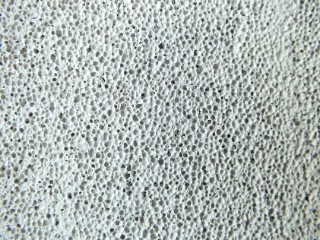
    In line with Germany's sustainability strategy and in support of the global Sustainable Development Goals (SDGs), the Fraunhofer Institute for Building Physics IBP has launched the joint project “AACtion,” dedicated to the development of environmentally friendly building materials. Facing the challenges of increasing global urbanization pressures, the project aims to significantly enhance resource efficiency and reduce the carbon footprint in the construction industry.

    more info
  • Ventilation system with fan
    © Shutterstock / PhotoHouse

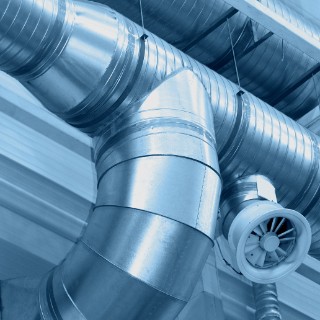
    The project aims at reducing acoustic emissions from fans.

    In the project “Acoustically optimized design of fan attachments and casings (ADVentAGe)”, hybrid active noise control systems are being developed and validated in collaboration with project partners. These can be integrated into fan casings or typical fan attachments such as inlet cones, protective grilles and diffusers to significantly reduce acoustic emissions from fans.

    more info